
Guide 05 · Required reading · Law, not preference
Cords and kids: the blind cord rules, plainly
Loose blind and curtain cords have strangled young children in Australia. That is why corded internal window coverings are covered by a mandatory national standard, and why this page has no wry asides. Here is what the standard requires, what it asks of your install, and the honest shortcut.
What the standard is
Australia has had a mandatory safety standard for corded internal window coverings since 2010. It covers how corded blinds and curtains are supplied, labelled and installed, and it exists because a dangling cord at toddler height is a genuine strangulation hazard, quiet, fast and entirely preventable. The regulator's own page is the authority on it, and worth reading in full: Product Safety Australia: blind and curtain cords.
We explain the standard here; we don't certify anyone's installation, including yours. If any detail on this page ever disagrees with the regulator, the regulator wins.
The three numbers that matter
- 220 mm, the loop limit. A loose cord must not be able to form a loop of 220 mm or longer at less than 1600 mm above floor level. That's roughly a child's head, which is exactly the point.
- 1600 mm, the cleat height. Cleats and cord guides that secure a loose cord must be fixed at least 1600 mm above the floor, out of a small child's reach.
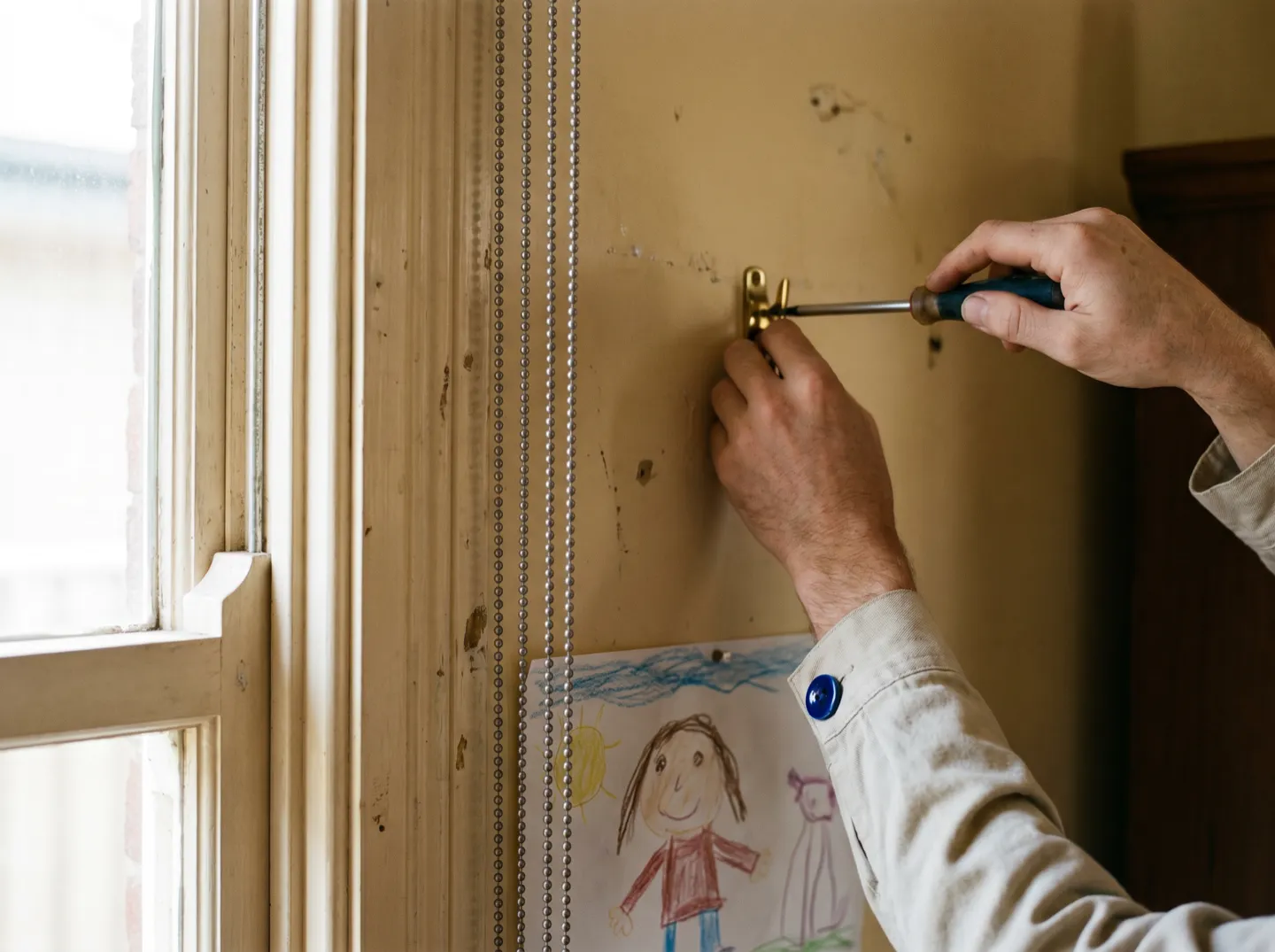
- Attached, always. Tension devices, the little chain tensioner that comes with your roller or vertical, must be firmly fixed to the wall or window frame so the chain can't be pulled into a loop. Sitting in the box, it protects the box.
What this asks of a DIY install
-
Fit every device in the box
New blinds come with the cleat, tensioner or cord guide the standard requires, plus instructions for where it goes. Fitting the blind and binning the tensioner is the single most common DIY cord failure, and it's a five-minute fix with two screws.
-
Keep the chain taut, not tidy
A tensioner mounted too close to the headrail leaves slack, and slack is loop. Mount it at the height the instructions give so the chain runs firm. Taut chain, no loop, done.
-
Audit the blinds you already own
The standard has applied to new supply and installation since 2010; the house you bought may predate it. Walk each room: any looped cord a child could reach needs a cleat fitted at 1600 mm or better, or the cord shortened, or the blind retired. Second-hand and hand-me-down blinds deserve the same audit before they go up.
-
Think about the furniture, not just the floor
A cot, bed or couch under the window is a ladder. The regulator's advice is blunt: keep cots and climbable furniture away from windows with cords. If the room's layout can't move, the cord has to.
Cordless. Spring-assist rollers, wand-tilt venetians and cordless honeycomb styles remove the hazard instead of managing it. In a nursery or a room small children sleep in, choosing cordless at order time beats every cleat and tensioner ever fitted, and it's the option we point every parent at first. Ask for it by name on the order or at the free measure.
Sources
- Product Safety Australia: blind and curtain cords · the mandatory standard, the installer obligations, and the safety advice this page summarises.
- Product Safety Australia: blind and curtain cord safety for consumers · the plain-language checklist for the blinds already in your house.
