
Area guide · The inner suburbs · Fiddly, honestly
Blinds for older Newcastle homes: Cooks Hill, Hamilton, Islington
Terraces off Darby Street, workers' cottages in Islington, Hamilton and Mayfield weatherboards that have been settling since Federation. Beautiful windows, none of them square, and half of them a step from the footpath. Here's how the method bends, and where it breaks.
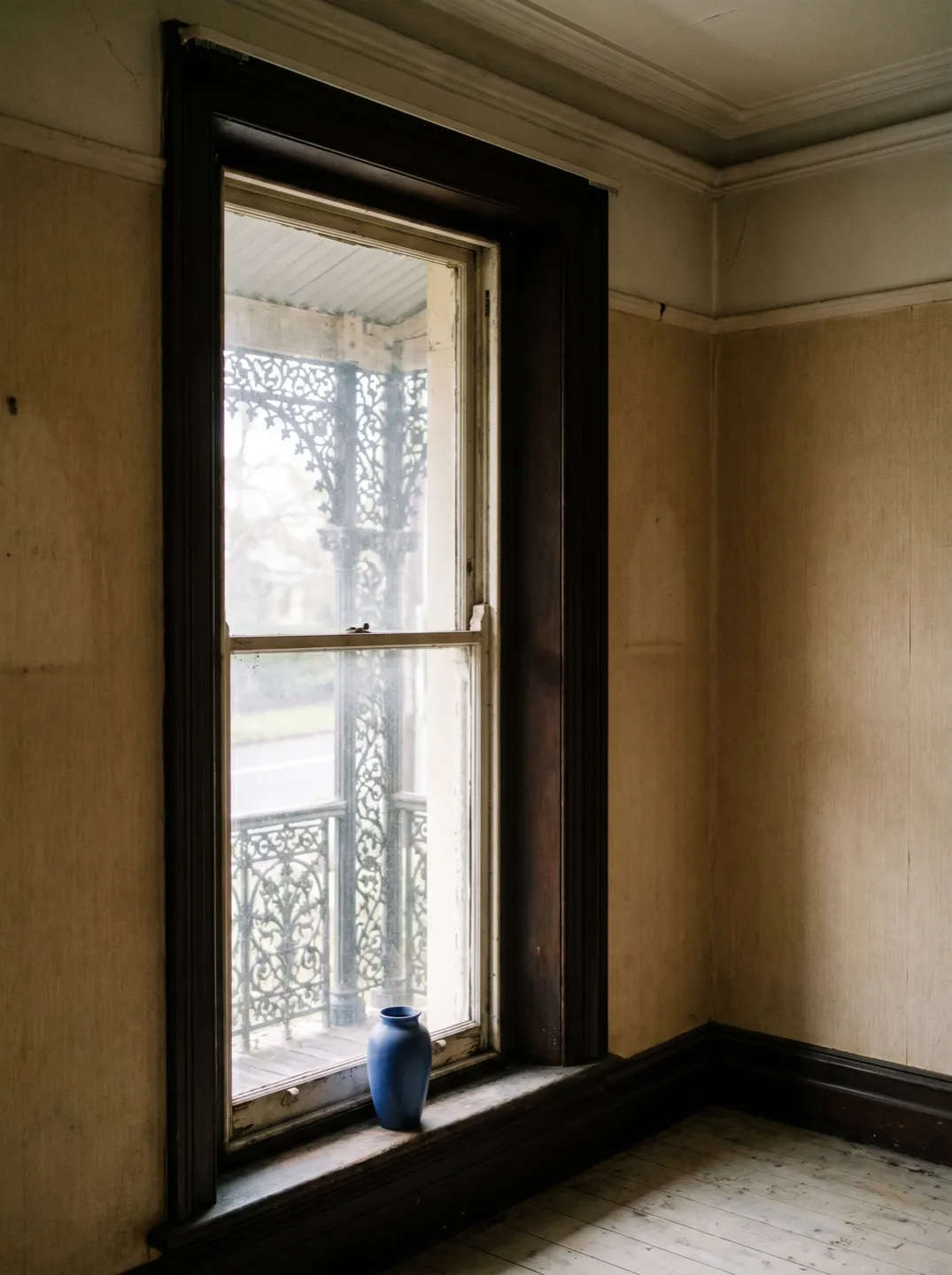
Assume nothing is square. You'll usually be right.
An eighty-year-old opening has been moving its whole life. The three-place measure isn't a nicety here, it's the difference between a blind and a returns conversation: widths that differ 10 mm top to bottom are normal, and the diagonals disagree more often than they agree.
So the older-home method adds one habit: measure the diagonals first, before you've emotionally committed to a fit. The number decides the whole strategy.
The diagonal decides
| Diagonals disagree by | What it means | The play |
|---|---|---|
| 0–5 mm | Square enough. The window is lying about its age. | Measure normally; reveal fit is on the table if the depth's there. |
| 5–10 mm | A visible lean to a blind, invisible to a dinner guest. | Face fit, generous overlap; the fabric hangs plumb and the opening's lean hides behind it. |
| More than about 10 mm | The opening is properly out of square, and it rarely travels alone. | Stop. This is the honest list's territory, and the free measure exists for exactly this window. |
Privacy is the actual brief
In the terrace pockets the real job isn't light control, it's the footpath. When the glass sits a metre or two from passing traffic, "see out without being seen in" is the specification, and it changes the fabric logic:
- Day privacy: light-filter fabric or a sheer does it while the sun's up; the street sees a glow, you see the street.
- Night privacy: every light-filter fabric becomes a shadow theatre after dark. Front rooms on the street want a blockout layer for evenings, which is why the double roller earns its place on terrace fronts.
- The bay at the front: the classic terrace bay is three blinds meeting at angles, and it's on the don't-attempt list for measuring reasons, not skill-shaming ones.
What the old walls ask of the install
-
Respect the architraves
Wide period architraves are the natural face-fit landing zone: solid timber, easy pilot holes, and small filled holes if you ever change your mind. Screwing into rendered masonry above them is a masonry-bit job; check which one your wall is before Saturday.
-
Probe before you trust
Old timber can be old in both senses. Press a fingernail into the reveal where the bracket will go: soft, powdery or previously puttied timber won't hold a screw that gets pulled daily. Sound timber, carry on; suspect timber, that's a substrate problem before it's a blind problem.
-
Mind the sash gear
Double-hung sashes carry cords, pulleys and sometimes counterweights in the frame sides. Keep bracket screws to the top of the reveal or the architrave face, out of the sash channels, or a working window becomes a decoration.
-
Level off the level, never the sill
Old sills fall away by design and by decades. A blind levelled to a sagging sill copies the sag. The install guide's rule applies double here: the spirit level is the only honest witness in the room.
Inside your own rooms, fit what you like. If the house is heritage-listed and the change shows from the street, or you're in a conservation area and unsure, a call to the council's heritage desk before ordering is cheaper than the conversation after. We teach measuring, not planning law, and we know where our page ends.
The pattern in these streets: the back rooms and upstairs bedrooms are honest DIY wins, and the street-facing front, with its bay, its lean and its privacy brief, is the one to hand over. Run each window through the planner and it will draw that line for your actual house, or skip straight to the free in-home measure for the front and keep the rest.
