
Area guide · The west · Mostly easy, if you respect the batch
Blinds in Fletcher, Chisholm and the new estates
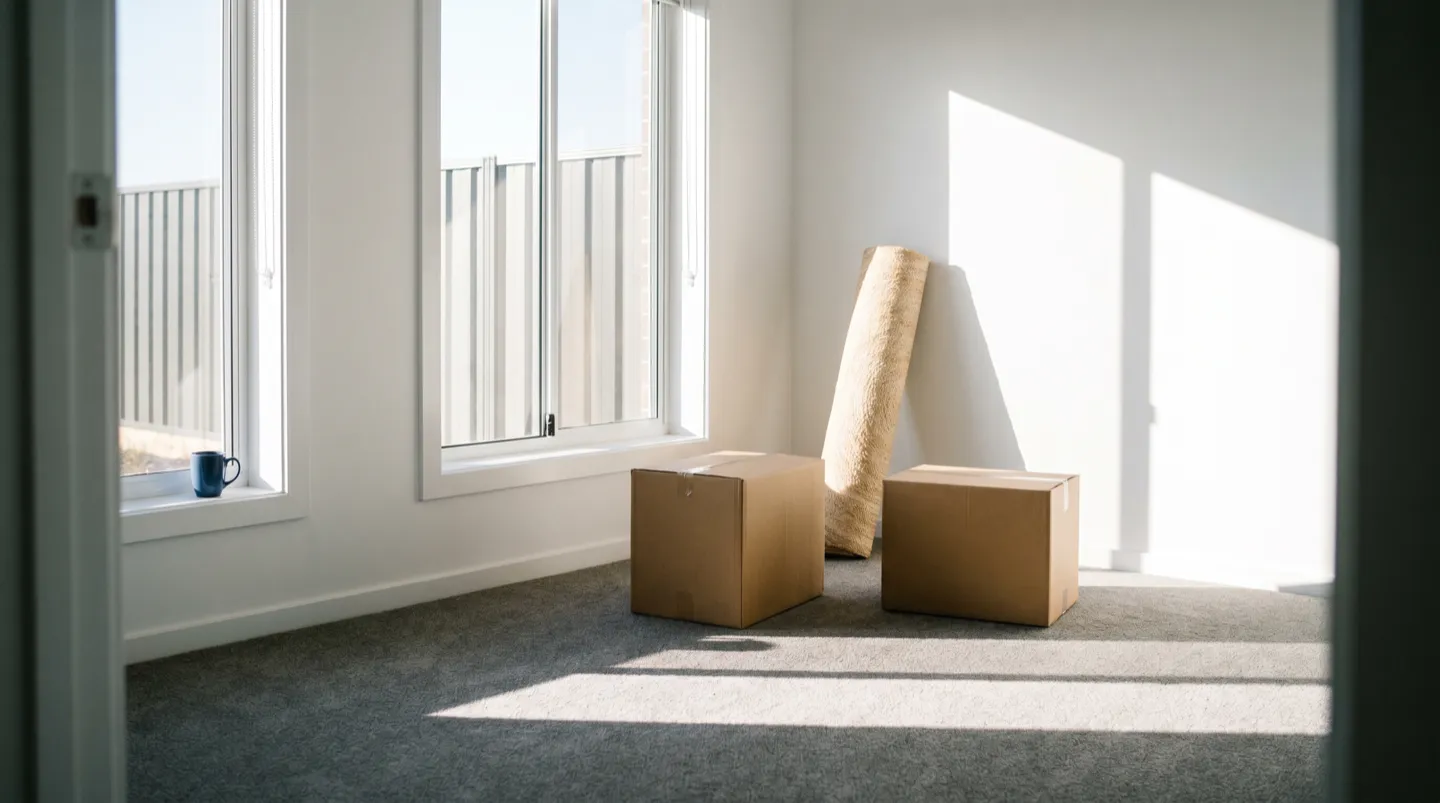
Handover day comes with keys, a mortgage and somewhere north of fifteen bare windows. The good news: a new build is the friendliest measuring environment in the Hunter, and most of those windows are honestly DIY. The rest of this page is about the one enemy you do have, which is repetition.
What works in your favour out here
- Square openings. New reveals are the closest thing to true rectangles this trade sees. Your three width measurements will often agree to the millimetre, diagonals too. Enjoy it; the terrace owners can't.
- Consistent construction. Plasterboard reveals over timber framing, predictable depths, no eighty years of settling or seven layers of paint to measure through.
- Reveal fit suits the look. Square-set modern openings carry a recessed roller beautifully, and a double roller gives the living areas day and night in one bracket set, if the reveal depth allows it.
The two local problems, named
The western sun. The growth-corridor estates catch the full afternoon load on their west and north-west glass, and fresh paint plus grey carpet plus bare windows is a greenhouse with a hallway. For the west-facing bedrooms and living rooms, blockout fabric is the difference between a room and an oven-adjacent experience, and it's worth deciding which windows get blockout before ordering anything, not after the first heatwave. Our glossary covers the fabric terms; the choosing logic lives inside the measuring guides where it belongs.
The batch. One window measured wrong is an annoyance. One wrong number inside a twenty-window order is a remake you fund, inside a week when you're also moving house. The discipline below is how a batch stays honest.
The batch-measure discipline
-
One sheet, one row per window, no twins
Print the measure sheet. Every window gets its own row and its own name ("bed 2 left", "kitchen over sink"), even the ones that look identical. In estate builds they're identical on the plan and 10 mm apart in the plaster.
-
Walk the house once for fit, then once for numbers
First lap: decide reveal or face per room and write it down. Second lap: tape work only, three widths and three drops per window, smallest wins. Splitting the laps keeps the decisions out of the arithmetic, which is where batch errors breed.
-
Have someone read the sheet back
Sixty numbers survive better with a second voice. One person at the window with the tape, one at the bench reading back what got written. Fifteen minutes, and it catches the swapped width-and-drop before the order form does it permanently.
-
Order in two waves if nerves allow
The bedrooms you need first, then the rest once wave one has taught you the form's own quirks, especially whose job the deduction is. A staged order costs patience; a batch mistake costs a remake.
Here's the risk maths, straight: a batch order succeeds only if your error rate across sixty measurements and twenty form rows is essentially zero, in handover week. Plenty of people manage it. Plenty of people also decide the two easy singles are the fun part and the other eighteen are a job for someone whose tape does this daily, on a free measure and quote that costs nothing to hear. Both are winning moves; pick the one that matches your week.
Rooms worth a second thought before the order goes in
| Room | The call worth pausing on |
|---|---|
| West-facing bedrooms | Blockout, face fit if you want genuine darkness; the reveal light gap is real. The trade-offs. |
| Nursery / kids' rooms | Cordless first, every time. The cord rules are law and the cordless option deletes the problem. The rules. |
| Living, north glass | Double roller (sheer + blockout) earns its keep here; check the reveal depth fits the double bracket before falling in love. |
| Sliding doors | Vertical or panel glide territory: long tracks, tighter tolerances. The graded board is honest about both. |
| The stairwell void window | Don't. Not because of the blind, because of the ladder. The honest list. |
