
Area guide · The east · Easy install, unforgiving materials
Blinds near the beach: Merewether, Bar Beach, Stockton
Within sight of the water, the measuring is the easy part. Salt air works on chains, brackets and slats every day you own them, glare comes off the sea at angles no eave was designed for, and up on The Hill the view is the one thing nobody wants to cover. The choices below are where coastal orders go right or wrong.
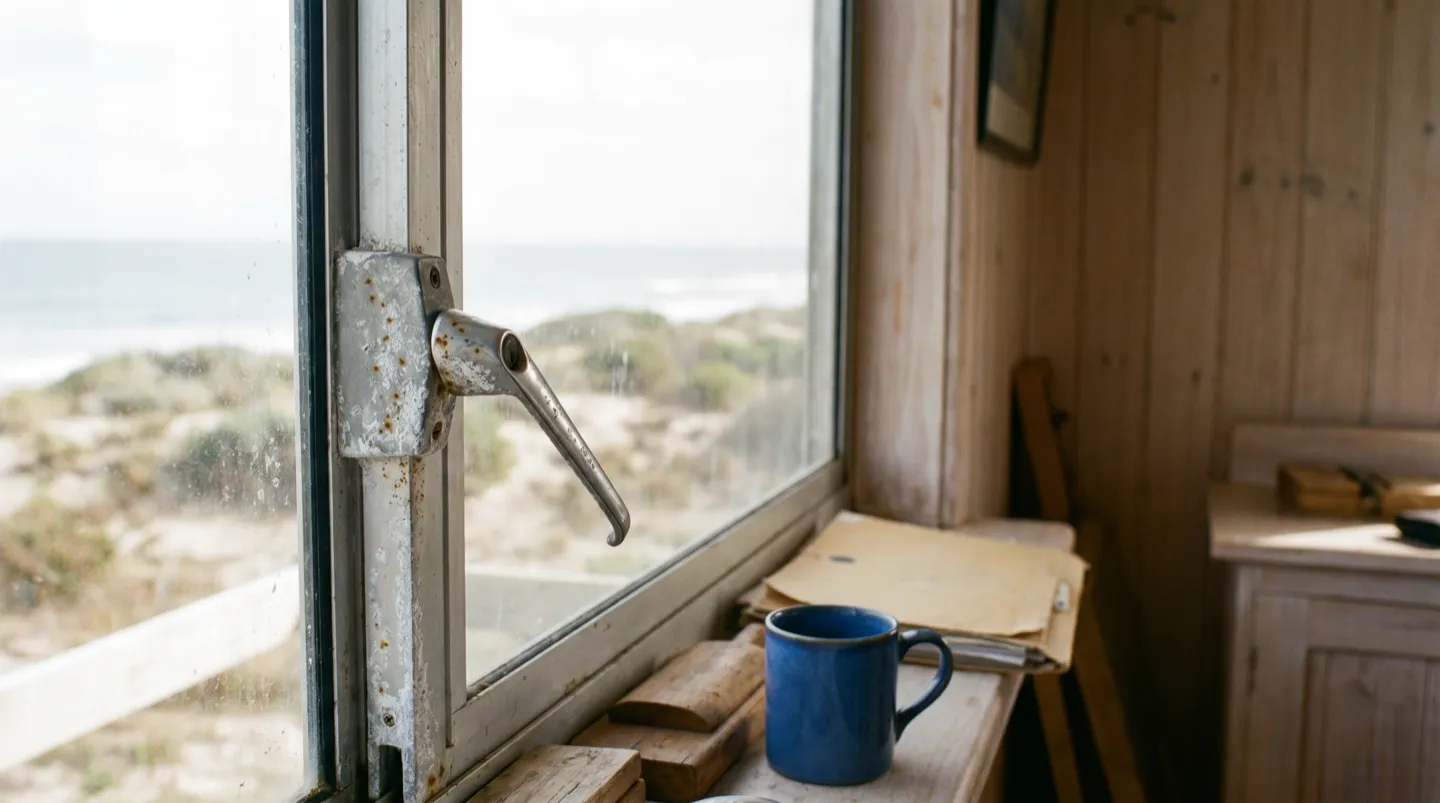
Rule one: the hardware lives in the weather too
Everyone specs the fabric and nobody specs the chain. Within a few streets of the surf, uncoated metal components, chains, bracket springs, venetian mechanisms, pick up the same salt bloom as that winder above. It's not cosmetic; corroded mechanisms drag, stick and eventually seize. When you're ordering:
- Ask for coastal-suited hardware by name: plastic or stainless chains over plated steel, powder-coated brackets and rails over bare finishes. The order form rarely volunteers the question; you have to ask it.
- Prefer fewer moving parts. A roller has one mechanism; a venetian has fifty small ones. Simplicity is a corrosion strategy.
- If venetians it must be, aluminium or PVC over timber. Powder-coated aluminium shrugs at salt and humidity; raw and painted timber slats swell, check and fade faster this close to the water.
- Rinse-and-run maintenance is real: a wipe-down of rails and chains a few times a year genuinely extends coastal blind life. Boring advice, measurable results.
Rule two: glare comes off the water, not just the sky
East-facing rooms at Merewether and Bar Beach get the morning sun twice, once from the sky and once bounced off the sea, and it arrives low, under eaves, straight onto screens and benchtops. Blockout alone is a blunt fix because it deletes the view along with the glare. What actually works facing water:
- Sheer or light-filter as the front line: knocks the bounce down to a glow while the horizon stays visible.
- A blockout layer behind it for sleep and screen time: the double roller was practically invented for east-coast bedrooms.
- Darker sheer weaves see through better than pale ones in bright conditions, a counter-intuitive truth worth testing with samples against your actual window before ordering a houseful.
The Hill and the apartment problem
Up on The Hill and along the Bar Beach ridge, the brief inverts: floor-to-ceiling glass, a harbour or ocean view that justifies half the mortgage, and light control that must never amputate it. Two honest notes:
- View-preserving control is a layering decision, sheer plus blockout, or a light filter chosen dark enough to see through, and it's better decided with samples held up to your actual glass and horizon than from a swatch on a bench.
- Apartment glass runs big. Full-height panes head past the 2400 mm span where DIY stops being sensible, strata rules may have opinions about street-visible window furnishings, and high glass over balconies is ladder work with consequences. Most of this pocket sits, honestly, at the done-for-you tine, and the free measure handles the strata-and-samples conversation in one visit.
What stays easy out here
Plenty. The standard bedroom and living windows of Merewether's and Stockton's older beach homes measure and fit exactly like the main guide teaches, aluminium frames and all (fix to the reveal timber or wall, never into the frame itself). Choose the hardware like this page nags you to, fit the cord safety devices like the law requires, and a coastal roller is still a one-Saturday, one-person win.
Standard windows: DIY with the right hardware, happily. The view glass, the full-height panes, anything over a balcony rail: that's measure-visit territory, and the visit costs nothing. The planner will call it window by window, or go straight to the enquiry.
